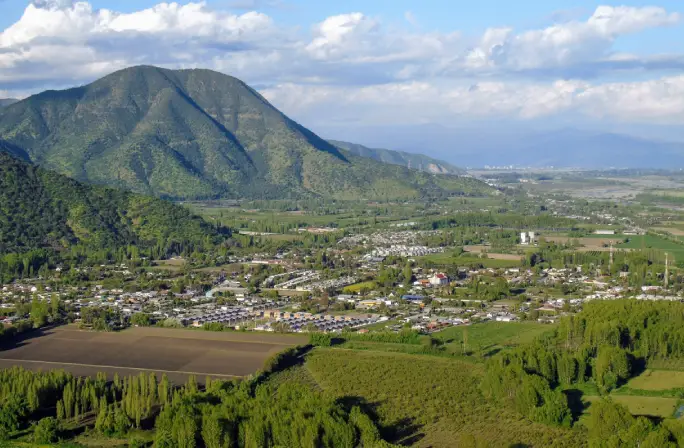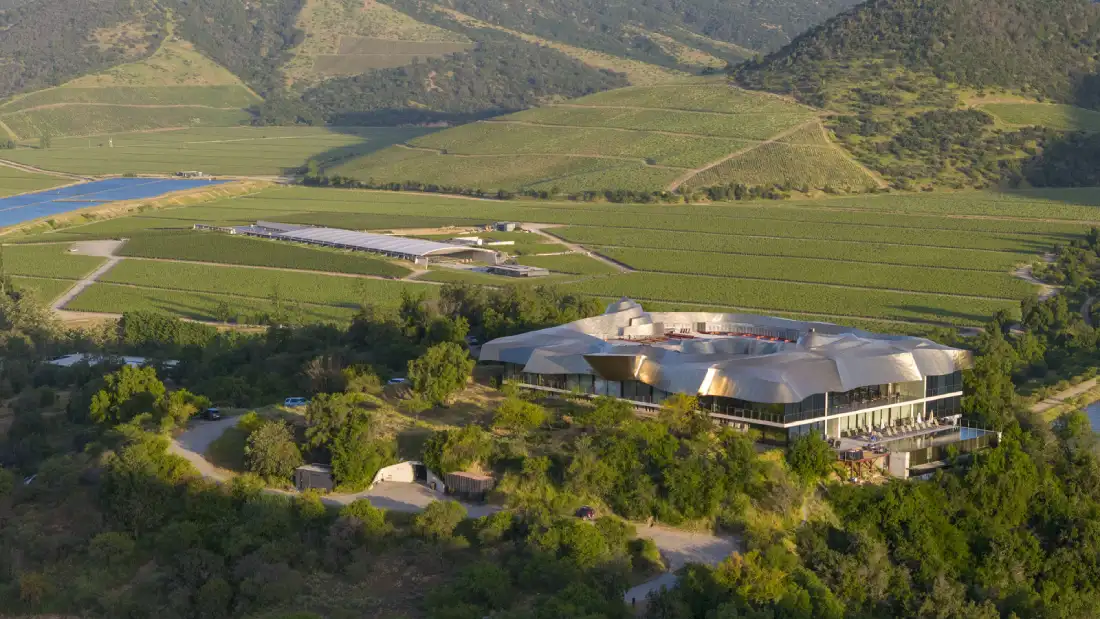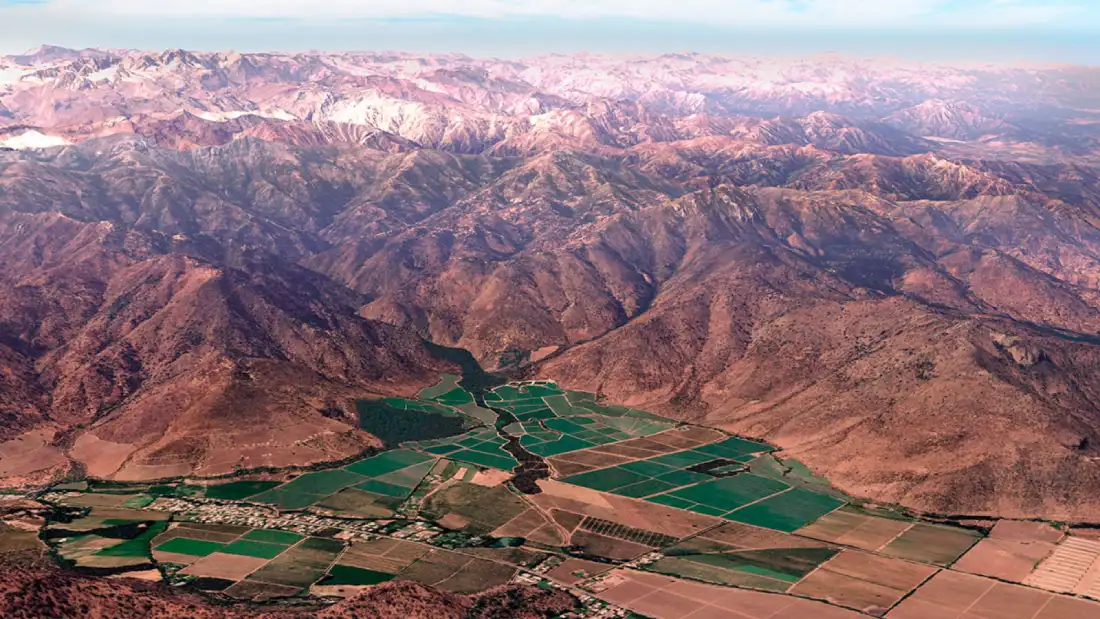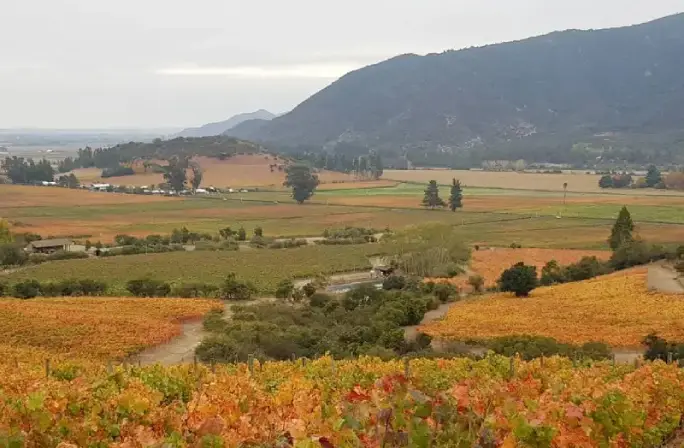
The Almahue and Rapel Valley, located about 2 hours south of Santiago in the O'Higgins Region, is a true cultural mosaic and a key destination where huaso traditions are not merely history, but a living reality. Spanning the municipalities of Pichidegua and Las Cabras, this region captivates visitors with its deep-rooted rural and agrarian identity. It is a fascinating wine tourism destination that pairs classic Chilean countryside landscapes with unique architectural and heritage landmarks, such as the historic Parish Church of La Torina—designed in 1767 by Joaquín Toesca—and the majestic Azudas de Larmahue, ingenious 18th-century waterwheels that embody the harmonious union between nature, community, and human ingenuity to sustain the local agriculture.
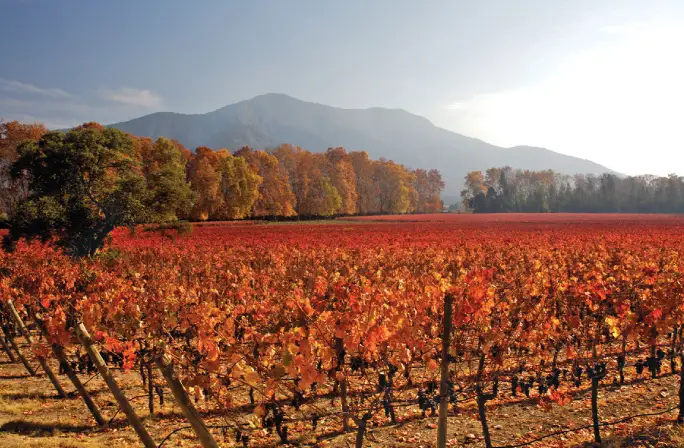
On a technical level, the terroir of this sub-valley possesses exceptional suitability for producing robust red wines with immense character. The richness and diversity of its soils are home to some of the oldest Carménère plantings in Chile and the world, featuring vineyards planted in 1945 whose old-vne roots bestow unmatched complexity upon the grapes. The wisdom of its winegrowers, passed down through generations, is complemented by the region's rich artisanal and agricultural heritage—famous as well for delicate corn husk crafts, biodiversity trails winding through groves and hills, and sustainable initiatives like the Casa de la Miel (House of Honey), which preserves the unique properties of native local flora.
Toward the Rapel area, the environment transforms under the direct influence of water. Strategically situated in municipalities like Las Cabras and near the lake, the vineyards benefit from a privileged microclimate characterized by high diurnal temperature variation. This temperature swing, coupled with mild breezes from the river ecosystem, slows fruit ripening to allow for an optimal buildup of sophisticated aromas and flavors. These conditions are ideal for crafting premium and high-end wines from noble varieties such as Cabernet Sauvignon, Carménère, Syrah, and Pinot Noir—solidifying the valley as a winegrowing region of immense international prestige.